

Launch does not mark the end of a software mission. It marks the beginning of the longest phase. Missions change, models evolve and payloads generate new data, while software must continue operating with finite compute, intermittent connectivity and no on-site maintenance. Commercial space is moving from one-off hardware delivery to continuous operation across the orbital lifecycle
01 · LAUNCH IS THE BEGINNING
The software lifecycle begins when the spacecraft reaches orbit
On the ground, a software fault can be investigated on site and a device can be replaced. In orbit, those options disappear. A configuration error, failed update or poor resource allocation can affect the mission that follows
Spacecraft often operate for years. New targets, algorithms and services will emerge long after launch, requiring software that can remain stable while evolving under control
02 · WHAT HAPPENS IN ORBIT
The real question is not simply whether software can run
Tomorrow's task may be different
New observation targets, algorithms and services require applications that can adapt after launch
Every unit of compute must serve the mission
CPU, GPU, NPU, memory and storage must be coordinated according to changing priorities
Not every byte can wait for the ground
Imagery and telemetry need to be filtered and analyzed onboard before essential results are transmitted
Updates must be safe and reversible
Validation, controlled rollout, monitoring and rollback are essential to protect the spacecraft mission
03 · SOFTWARE KEEPS EVOLVING
Move from one-time delivery to continuous growth
A software-defined satellite needs more than additional applications. It needs a lifecycle connecting ground development, validation, orbital deployment, operational monitoring and controlled updates
Hardware abstraction reduces repeated adaptation. Unified lifecycle control allows new capabilities to reach orbit with traceability and risk control. A space-ground loop turns models and policies developed on Earth into continuously evolving orbital capability
04 · ZHUMING SOLUTION
Connecting development, compute and orbital operations
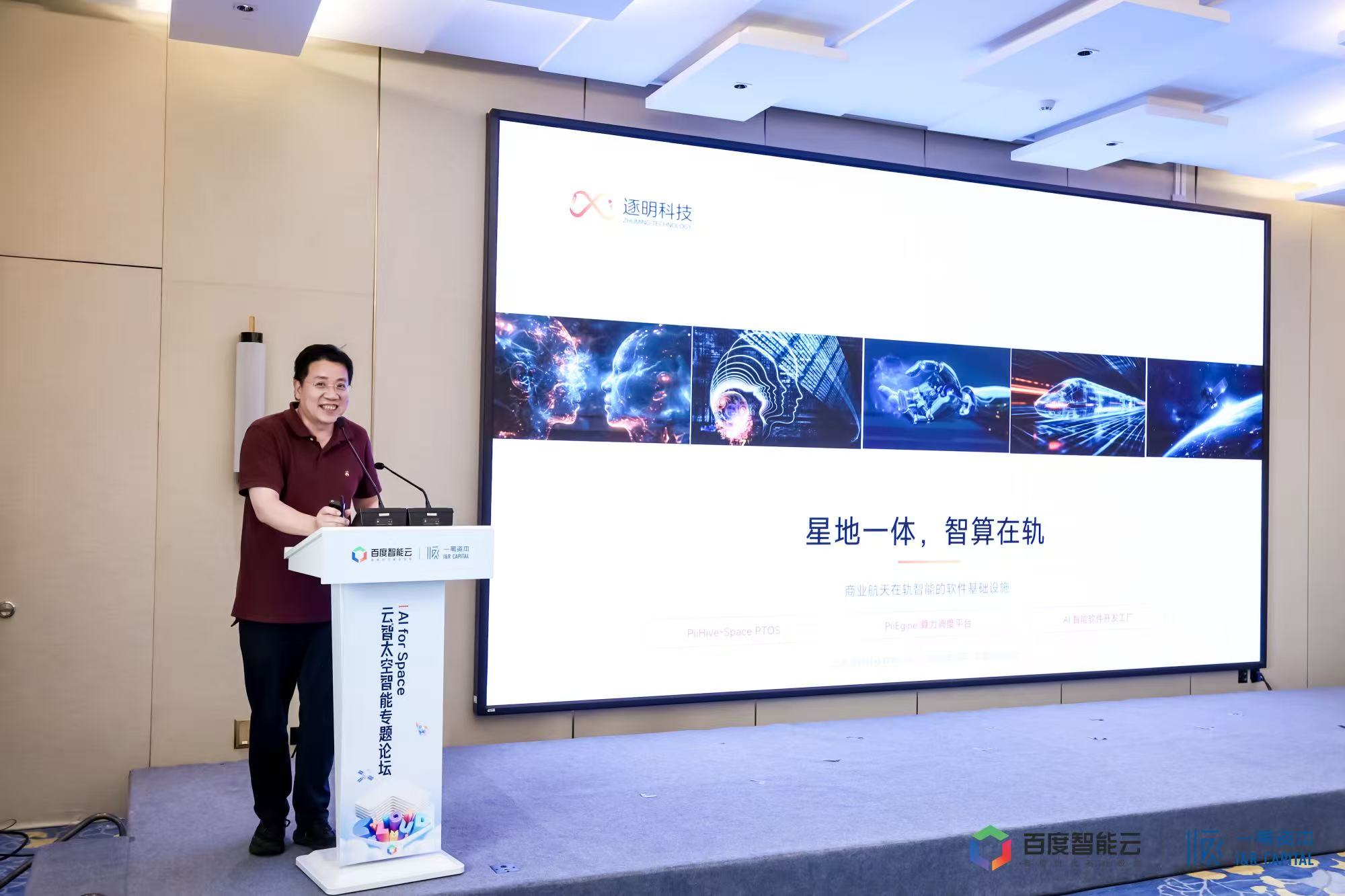
For long-term commercial space operations, Zhuming Technology builds AI Runtime Infrastructure. PiiHive-Space provides a unified onboard runtime so applications can be deployed, scheduled and evolved more consistently across hardware platforms and mission phases
Unified runtime
Abstract hardware differences and provide a consistent, controlled foundation for onboard applications
Heterogeneous scheduling
Coordinate CPU, GPU and NPU resources according to mission priority and current availability
Application lifecycle control
Manage versions, deployment, monitoring, upgrades and rollback as one traceable process
Space-ground collaboration
Connect ground development with orbital execution so models, policies and applications can keep evolving
05 · CUSTOMER VALUE
The outcome is a different way to deliver missions
Reach a runnable state faster
Reduce environment rebuilding, manual coordination and version drift across development and validation
Receive critical results sooner
Filter imagery, detect targets and analyze telemetry onboard before transmitting essential outcomes
Keep capability evolving
Use traceable releases, controlled upgrades and rollback so capability does not freeze at launch
Gain more value from finite resources
Continuously align onboard compute and applications with the mission that matters most
FROM LAUNCH TO CONTINUOUS OPERATION
From putting a satellite in orbit to keeping capability alive there
Commercial space is moving from one-time engineering delivery to long-term, continuous operations. Sustainable value depends not only on hardware and launch, but also on software that remains stable, upgrades safely and adapts to new missions
Zhuming Technology connects development, compute and runtime so onboard intelligence becomes a software system that can keep growing
About Zhuming Technology
Zhuming Technology builds runtime infrastructure for AI production and the physical world, connecting enterprise data centers, edge sites and intelligent devices so compute, models and tasks can be orchestrated and governed across cloud, edge and endpoint environments